
Perimenopause + Creatine: Why This Daily Habit Matters More Than You Think
For years, creatine had a reputation.
Big tubs. Gym bros. Bodybuilders.
But the conversation around creatine has changed dramatically — particularly for women.
And if you're entering your 40s, noticing changes in your strength, body composition, energy or concentration, it might be time to look at creatine very differently.
Because creatine isn't a hormone. It isn't a stimulant. And it isn't only for people trying to build huge muscles.
It's a naturally occurring compound your body already uses to help produce energy — particularly in tissues with high energy demands, including your muscles and brain.
And researchers are becoming increasingly interested in the role creatine could play in women's health across different stages of life, including the menopause transition. Research specifically in perimenopausal women is still developing, so it’s important not to oversell it — but the wider evidence around muscle, strength and exercise performance is compelling.
So let's talk about it.
First: What actually happens during perimenopause?
Perimenopause is the transitional period leading up to menopause.
For some women it starts in their 40s, although it can begin earlier, and fluctuating hormone levels can bring a long list of changes.
You may notice things like:
- Changes in your menstrual cycle
- Hot flushes or night sweats
- Poorer sleep
- Changes in mood
- Brain fog or difficulty concentrating
- Changes in body composition
- Reduced strength or muscle mass
- Lower exercise tolerance
- Feeling like the body you've known for years suddenly isn't responding in quite the same way
This is also an important stage of life to start thinking beyond simply “How much do I weigh?”
Your muscle, strength, physical function and long-term health matter enormously too.
And that's where creatine becomes interesting.
1. Muscle becomes increasingly important as we get older
We tend to associate muscle with looking toned.
But muscle is so much more than aesthetics.
Strong muscles help us move, train, stay independent, remain physically capable and support healthy ageing.
As women move through menopause and get older, maintaining muscle mass and strength becomes increasingly important.
The best foundation remains remarkably simple:
Eat enough protein.
Lift weights.
Keep moving.
And creatine can be a useful addition to that foundation.
Research in postmenopausal women suggests creatine is particularly effective when paired with resistance training. A recent systematic review found small but meaningful improvements in lean mass and strength, with the strongest evidence seen when creatine of at least 5g per day was combined with resistance exercise.
The key words there are:
Combined with resistance training.
Creatine isn't a replacement for exercise.
It's something that can help support what you're already doing.

2. Creatine can help support strength and training performance
Your muscles use a molecule called ATP as an immediate source of energy.
Creatine helps your body replenish that energy system during short, intense efforts — things like lifting weights, sprinting or pushing through a difficult exercise set.
That can help support your ability to train harder and maintain performance.
And over time, better-quality resistance training can help you hold onto something incredibly valuable:
Strength.
This is why we think the conversation for women in midlife needs to change.
Instead of:
“How can I get smaller?”
We need to start asking:
“How can I stay strong?”

3. And then there's the brain…
This is one of the areas making creatine particularly interesting for women.
Your brain requires a huge amount of energy.
Creatine also plays a role in the brain's energy system, which is why researchers are investigating its potential relationship with things like cognition, mental fatigue and mood.
Women's creatine metabolism may also be influenced by hormonal changes across different stages of life.
There is promising research around creatine and cognitive health, but the science specifically in perimenopausal women is still emerging rather than settled. A recent review concluded that perimenopause is an important area for future creatine research precisely because direct evidence in this group remains limited.
So if you've heard:
“Creatine fixes menopause brain fog.”
That's going too far.
But:
“Creatine supports cellular energy and is being investigated for potential benefits to cognition and brain health.”
That's a much more accurate — and still very exciting — conversation.
4. What about those days when exercise suddenly feels harder?
Poor sleep.
Stress.
Hormonal changes.
A busy life.
Training can simply feel different during your 40s.
And while creatine isn't going to magically fix a terrible night's sleep or remove every symptom of perimenopause, it can help support the energy system your muscles use during exercise.
This makes it particularly relevant if you're doing the kind of training we believe becomes increasingly important during midlife:
Strength training.
You don't need to become a bodybuilder.
Two or three consistent resistance-training sessions every week can be far more valuable than endlessly trying to burn more calories.
Think:
Squats.
Lunges.
Rows.
Presses.
Deadlifts.
Machines.
Dumbbells.
Progressively getting stronger.
Train for the woman you want to be at 60 — not just the number you want to see on the scale tomorrow.
5. Will creatine make me bulky?
This is probably the biggest misconception women have about creatine.
No — creatine doesn't suddenly make you bulky.
Building significant amounts of muscle takes time, progressive resistance training and adequate nutrition.
Creatine can help support training performance and increases in lean mass, but taking a scoop of creatine isn't going to transform you into a bodybuilder.
Another common concern is:
“Will creatine make me gain weight?”
Some people notice a small increase on the scale after beginning creatine because creatine helps draw water into muscle cells.
That's not the same thing as gaining body fat.
And it's another reason we shouldn't judge our health exclusively by the bathroom scale.
Strength, muscle, how you feel, how you perform and how your clothes fit matter too.
6. How much creatine should women take?
For most healthy adults using creatine as a daily supplement, 3–5g of creatine monohydrate per day is a commonly studied maintenance amount.
You don't need a complicated schedule.
You don't need to cycle on and off it.
And for everyday use, you don't necessarily need a loading phase.
The most important thing?
Consistency.
Creatine works by gradually increasing your body's creatine stores, so think of it as a daily habit, not something you only take before a workout.
7. What time should I take it?
Morning?
Before gym?
After gym?
At night?
For most people, don't overcomplicate it.
The best time to take creatine is the time you'll actually remember to take it every day.
That's why we love attaching supplements to habits you're already doing.
And there's one thing almost all of us do every day:
Drink water.
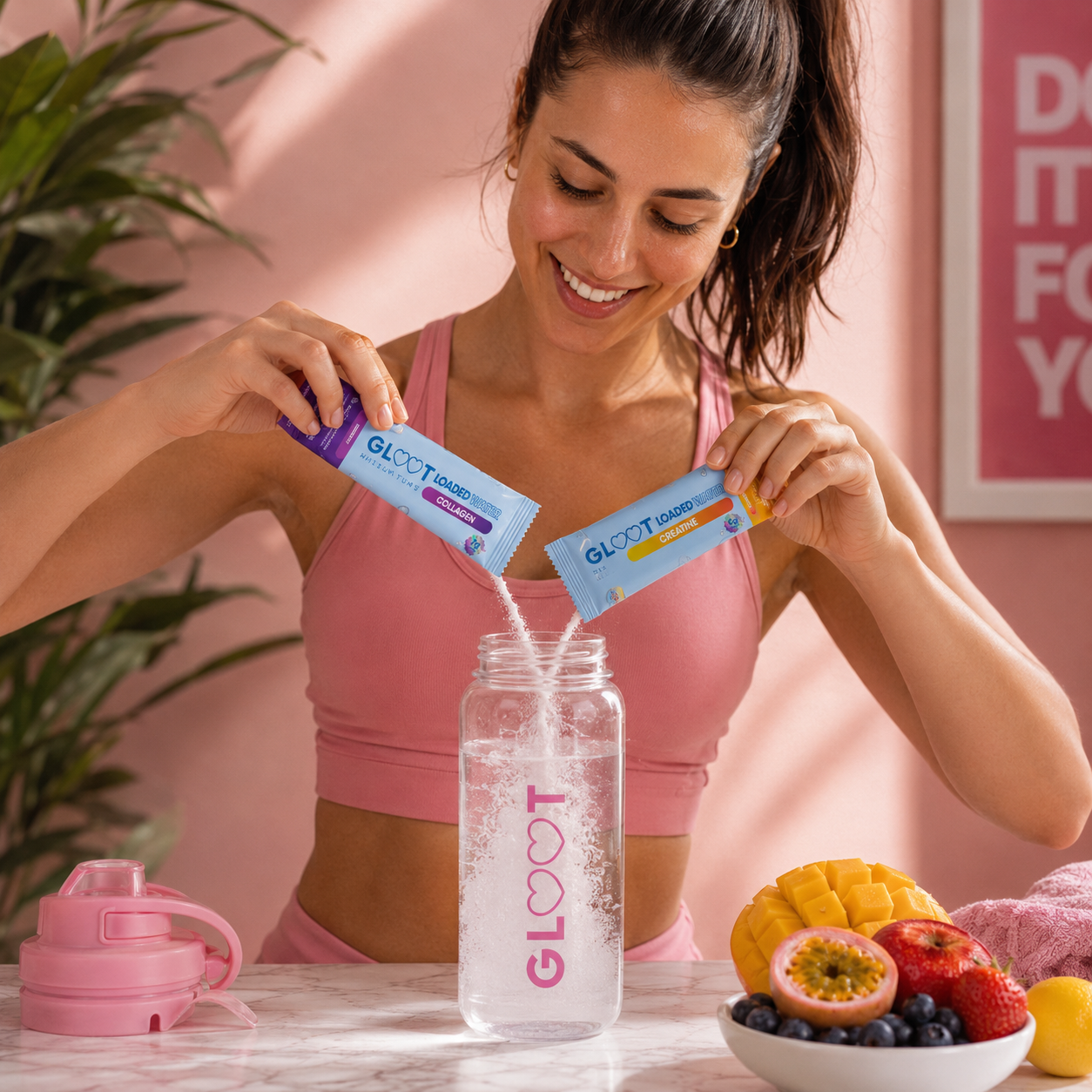
Meet Loaded Water Creatine
We wanted to take creatine out of the bodybuilding aisle and make it feel like something it should always have been:
A simple daily wellness habit for women.
Each serving of Loaded Water Creatine gives you 5g of creatine in an easy daily sachet.
Add it to your water.
Drink it every day.
Done.
No massive supplement tub.
No complicated protocol.
No “gym bro” required.
Your perimenopause strength stack
Creatine isn't the whole solution.
Think of it as one part of a much bigger strategy for looking after yourself through your 40s and beyond.
Prioritise:
Protein → to support your muscle.
Resistance training → to give your body a reason to stay strong.
Creatine → to support strength and training performance.
Hydration → every single day.
Sleep and recovery → because doing more isn't always better.
Good nutrition → because supplements should supplement the basics, not replace them.
And speak to your healthcare professional if you're struggling with symptoms of perimenopause or considering treatment. Creatine isn't a replacement for appropriate medical care or prescribed hormone therapy where that's indicated.
Creatine isn't just for gym bros anymore.
The conversation has moved on.
Women are discovering that getting older shouldn't mean accepting becoming weaker.
Your 40s aren't the time to stop prioritising muscle.
They're the time to start.
And one of the simplest habits you can add?
Creatine. Every day.

